
When to Restock Pantry Staples: Your Purchase Cycle
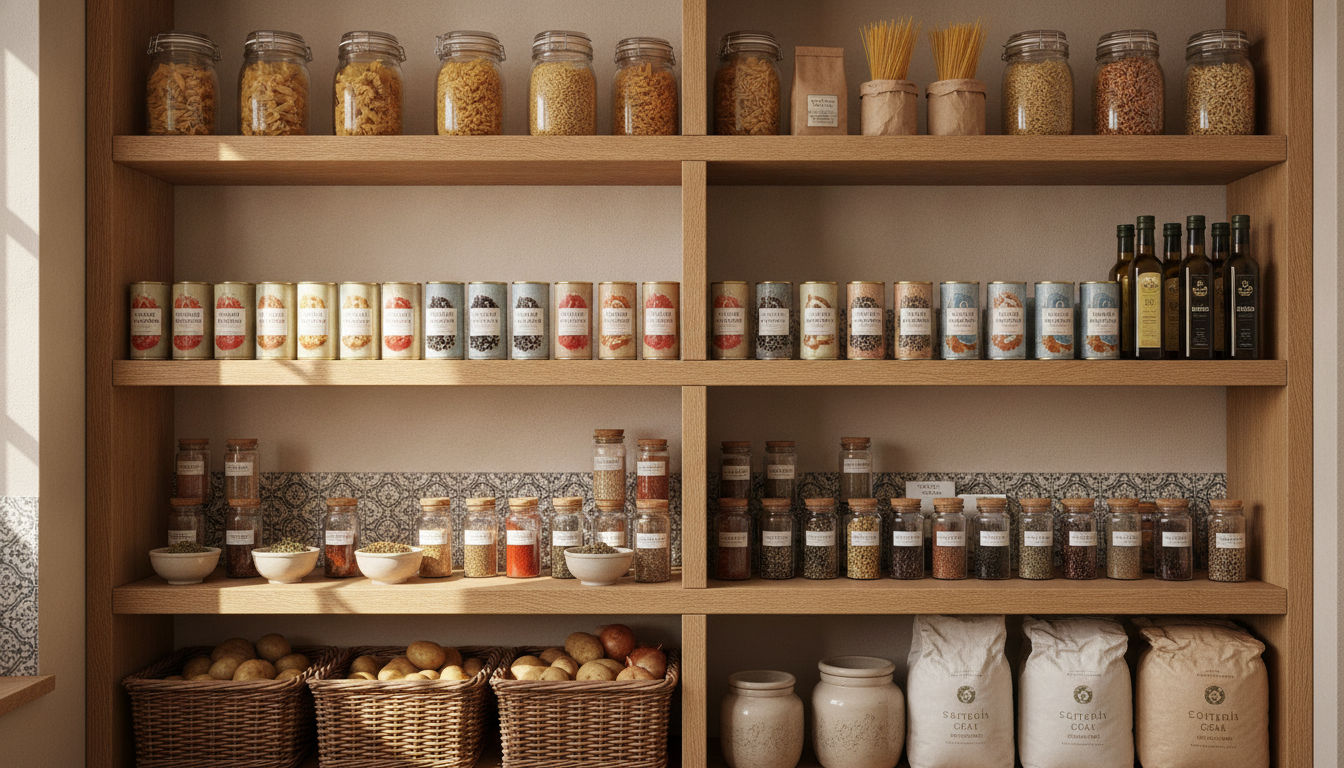
You're halfway through preparing dinner, reaching for the pasta, only to find the box completely empty. Again. Or perhaps you're brewing your morning coffee, only to realise you've just used the last of the beans. Sound familiar? We've all been there, staring into a cupboard that should be full of essentials but instead presents a sad, echoing void.
TL;DR: Running out of pantry staples is frustrating and often leads to impulse buys at higher prices. The key to avoiding this is understanding your personal purchase cycles. By tracking what you buy and how often, you can anticipate when you'll need to restock. Tools like Costmanager.online make this simple by digitising your receipts and showing you your buying history, allowing you to set smart reminders and save money.
Why Knowing Your Purchase Cycles is Gold
Most of us shop reactively. We notice we're out of something, then add it to the next shopping list. This works, but it's not efficient. It can mean last-minute dashes to expensive convenience stores, splitting your shop across multiple trips (costing time and fuel), or missing out on sales because you weren't ready to buy.
Understanding your purchase cycles for pantry staples changes this. It moves you from reactive to proactive. Imagine knowing, with reasonable certainty, that you typically buy a new bag of flour every 6-8 weeks, or a large bottle of olive oil every 3 months. This knowledge lets you:
- Avoid Running Out: No more mid-cook emergencies.
- Shop Smarter: Buy when items are on sale, not when you're desperate.
- Reduce Waste: You're less likely to overbuy and have things expire.
- Plan Better: Streamline your shopping trips, making them more efficient.
- Save Money: By buying strategically and avoiding urgent, expensive purchases.
This isn't about becoming a prepper; it's about smart, informed consumer habits.
Defining Your Pantry Staples
Before you can track purchase cycles, you need to know what to track. 'Pantry staples' mean different things to different households. For a family in Italy, it might be pasta, tinned tomatoes, and olive oil. For a German household, perhaps flour, sugar, and UHT milk. The key is identifying the items you truly use regularly and cannot easily substitute.
Your Core Pantry Staples Checklist
Think about what you use almost every week, or at least every month. These are your foundational ingredients. Here’s a checklist to get you started:
- Cooking Essentials: Pasta, rice, flour (wheat, alternative), sugar, salt, cooking oil (olive, sunflower, rapeseed), vinegar, tinned tomatoes, tomato paste, stock cubes/broth.
- Baking Basics: Baking powder, bicarbonate of soda, vanilla extract, yeast.
- Condiments/Sauces: Ketchup, mustard, mayonnaise, soy sauce, various herbs and spices.
- Breakfast Items: Coffee, tea, cereals, oats, long-life milk.
- Tinned Goods: Tuna, beans, chickpeas, lentils.
- Dry Goods: Dried fruit, nuts, breadcrumbs.
- Cleaning Supplies: Dish soap, laundry detergent, multi-surface cleaner, toilet paper. (Yes, these are 'household staples' that follow similar purchase cycles!)
Walk through your kitchen. What do you grab constantly? What causes a minor crisis if it runs out? Those are your staples.
How to Figure Out When to Restock Pantry Staples: Your Purchase Cycles
Once you have your list, the real work (and fun!) begins. You need to gather data. This is where a tool like Costmanager.online becomes incredibly powerful.
1. Estimate Initial Cycles (The Guessing Game)
Before you have solid data, make an educated guess. How often do you *think* you buy a new bag of 1kg pasta? Or a bottle of washing up liquid? Jot these down. These are your starting hypotheses.
| Pantry Staple | Estimated Purchase Cycle |
|---|---|
| 1kg Pasta | Every 2-3 weeks |
| 500ml Olive Oil | Every 4-6 weeks |
| 1kg Flour | Every 6-8 weeks |
| Coffee (250g) | Every 1-2 weeks |
| Dish Soap | Every 8-10 weeks |
2. Track Every Purchase Religiously (The Data Collection)
This is the most critical step. For the next few months, meticulously track every grocery purchase. This is where Costmanager.online shines.
- Scan Your Receipts: As soon as you get home from Aldi, Lidl, Carrefour, Edeka, Esselunga, or wherever you shop, scan your receipt. Costmanager.online uses advanced AI, including Google's Gemini service, to read even the most challenging receipt images and PDF documents. It's designed to handle everything from faded thermal paper (your Kassenbon or scontrino won't last forever!) to long, multi-page slips, capturing every item, price, and even cryptic abbreviations like 'MOZZ BBL' or 'POMODORI PELATI.' If for some rare reason the primary service can't read it, an on-device OCR acts as a fallback. Rest assured, your data is processed securely; nothing is saved to your account until you review and approve it, and your data is never sold. Get started with scanning here.
- Review and Categorise: After scanning, quickly review the items. Costmanager.online helps categorise items, giving you insights into your spending by category. Correct any minor errors. This ensures your data is clean and accurate for analysis.
3. Analyse and Refine Your Cycles
After a few weeks or months of consistent tracking, you'll have a treasure trove of data. Costmanager.online's price history feature is perfect for this. Look at individual products:
- How often do you see a specific product appear in your purchase history?
- What's the average time between purchases?
- Are there seasonal variations (e.g., buying more tinned tomatoes in winter)?
For example, you might find that while you estimated buying pasta every 2-3 weeks, your actual data shows it's closer to every 10 days because your family eats more pasta than you thought. Or perhaps you buy olive oil every 4 weeks but only a small bottle; you might consider a larger bottle less frequently to save money.
This is also a great opportunity to track your personal grocery inflation. Are your staples getting more expensive? Costmanager.online can help you spot these trends.
4. Set Up Reminders (Costmanager.online Pro Feature)
Once you have a solid understanding of your purchase cycles, the Costmanager.online Pro subscription offers a restock reminders feature. You can set a reminder for a specific item to pop up on your shopping list or notify you when its typical purchase cycle is approaching. This is an absolute game-changer for proactive shopping.
Beyond Cycles: Factors to Consider
While purchase cycles are your primary guide, other factors should influence *when* you pull the trigger on a restock.
Sales and Promotions
Knowing your cycle allows you to wait for sales. If you know you'll need pasta in two weeks and it's 30% off today at Carrefour, you can buy it now. Without that knowledge, you might buy it next week at full price because you didn't realise you were running low.
Costmanager.online helps here too. By tracking prices across shops like Aldi vs. Lidl, you can see if a 'sale' is genuinely good value or just a regular price elsewhere.
Storage Space
Don't buy 50kg of flour just because it's cheap if you live in a small apartment and only have space for 5kg. Overstocking leads to clutter, potential waste (if things expire), and can obscure what you actually have.
Bulk Buying Considerations
Some staples are ideal for bulk buying if you have the space and use them frequently enough. Think large bags of rice, toilet paper, or long-life milk. Always calculate the unit price to ensure you're genuinely saving money. A scontrino from a big supermarket in Italy might show the unit price (e.g., €/kg) for larger packs, which is useful.
Expiration Dates
Always check expiration dates, especially on items with shorter shelf lives, even if they're considered staples (like certain types of fresh bread that freeze well, or specific dairy items). Rotate your stock using a 'first in, first out' (FIFO) system.
Seasonal Needs
Do you bake more around Christmas? Use more tinned goods in winter? Your purchase cycles might naturally adapt, but it's good to be aware of these patterns.
Putting It All Together: An Illustrative Example
Let's take 'Coffee, Ground (500g)' as an example for a two-person household in Germany:
- Initial Estimate: You guess you buy coffee every 3 weeks.
- Tracking with Costmanager.online: For three months, you meticulously scan every Kassenbon. Costmanager.online records every coffee purchase.
- Analysis: You look at your purchase history for 'Coffee, Ground (500g)'. You bought it on January 5th, January 20th, February 10th, February 28th, March 15th.
- Refined Cycle:
- Jan 5th - Jan 20th: 15 days
- Jan 20th - Feb 10th: 21 days
- Feb 10th - Feb 28th: 18 days
- Feb 28th - Mar 15th: 15 days
- Action: You set a Costmanager.online Pro reminder for 'Coffee, Ground (500g)' every 16 days. You also make a mental note to check Rewe's flyer for the '2 for 1' deal around the 6-week mark, knowing you can buy two bags to cover 5 weeks of consumption. This way, you never run out and often get a great price.
The average is around 17-18 days, so roughly every 2.5 weeks, not 3 weeks. You also notice that Rewe often has this coffee on a '2 for 1' deal every 6 weeks.
This structured approach saves you money and eliminates those irritating moments when you're caught without a key ingredient.
Using Costmanager.online to track your grocery spending is the foundation for mastering your pantry. It gives you the clear, unbiased data you need to make smart decisions.
Mastering Your Pantry Means Mastering Your Budget
Understanding when to restock pantry staples isn't just about convenience; it's a cornerstone of effective household budgeting and grocery saving. By embracing your purchase cycles, you transform random shopping into a strategic exercise. You'll spend less time, less money, and experience less stress in the kitchen. Give it a try, and watch your pantry (and your wallet) thank you. Download Costmanager.online today and start your journey to a smarter, more organised kitchen.
Key Takeaways
- Running out of pantry staples is a common problem leading to wasted money and time.
- Understanding your personal 'purchase cycles' for core staples is the solution.
- Identify your true staples: items you use regularly and cannot easily substitute.
- Estimate initial purchase cycles, then meticulously track every grocery purchase.
- Costmanager.online uses advanced AI (like Google's Gemini) to accurately read and digitise your receipts, even faded ones or PDFs, capturing all item details. Your data is secure and never sold.
- Analyse your purchase history in Costmanager.online to refine your estimated cycles.
- Use Costmanager.online Pro's restock reminders to proactively add items to your shopping list.
- Factor in sales, storage space, bulk buying opportunities, and expiration dates.
- A proactive approach saves money, reduces waste, and makes shopping more efficient.
Frequently asked questions
What are pantry staples and why should I track them?
Pantry staples are essential food and household items you use regularly, like pasta, flour, coffee, or cleaning supplies. Tracking their purchase cycles helps you avoid running out, buy strategically during sales, and ultimately save money and reduce stress in your kitchen.
How can an app like Costmanager.online help me track my pantry staples?
Costmanager.online helps by digitising all your grocery receipts with its advanced AI, including Google's Gemini service, which accurately reads items and prices from images and PDFs. This creates a detailed purchase history, allowing you to see exactly when you bought each staple and how often, and even set restock reminders with the Pro version.
Is my receipt data secure when using Costmanager.online?
Yes, your receipt data is handled securely. Costmanager.online uses robust AI services for reading receipts, but nothing is saved to your account until you review and approve it. Your data is strictly used to provide you with personal spending insights and is never sold to third parties.
How do I determine the 'purchase cycle' for an item?
Start by estimating how often you think you buy an item, then use your actual purchase history (easily viewable in Costmanager.online after scanning receipts) to calculate the average time between purchases. For example, if you buy coffee on Jan 1st, Jan 15th, and Feb 1st, your cycle is roughly every two weeks.