Aldi vs Lidl Prices: Your Receipts Show Who Wins
You've just emptied your wallet of all those crumpled, faded Kassenbon and scontrino slips. There's a Lidl receipt from last Tuesday with "MOZZ BBL" on it, barely legible, and a ridiculously long Aldi slip that required three separate photos to capture last week. You've heard the whispers, seen the online debates: "Aldi is cheaper!" "No, Lidl definitely wins!" But for your weekly shop, for the things you actually buy, how do you really know which one saves you more?
TL;DR: Stop guessing which discount supermarket is cheaper. The only way to truly compare Aldi vs Lidl prices for your specific shopping habits is to use your own receipts. This article will walk you through a practical, step-by-step method to track, compare, and understand where you're really saving money, focusing on consistent item-level data.
Why Aldi vs Lidl Prices Are So Tricky to Compare
It's a question every smart shopper in Europe asks: where do I get the best value, Aldi or Lidl? Both are giants in the discount supermarket world, known for their lean operations and focus on private-label brands. They offer remarkably similar shopping experiences: quick checkouts, often chaotic middle aisles, and a sense of getting a good deal. But actually pitting them against each other, item by item, is a challenge.
First, they mostly sell their own brands. You can't just compare the price of a specific Kellogg's corn flakes box or a certain brand of Coca-Cola, because those often aren't on the shelves. Instead, you're comparing Aldi's 'Harvest Morn' corn flakes with Lidl's 'Crownfield' corn flakes. Are they truly comparable? Maybe, maybe not. The ingredients might differ slightly, the taste could be different, and the packaging size is often unique to each retailer.
Then there are the ever-changing weekly offers. Both stores are masters of the 'Sonderangebot' or 'Super Saturday' deal. One week, Aldi might have an amazing price on fresh salmon, the next it's Lidl's turn. These promotions can skew your perception of overall prices if you're not tracking them consistently. Plus, prices can vary between regions, even within the same country. What's cheap in Berlin might be slightly more expensive in Munich, or vice versa.
Finally, there's your personal shopping list. Do you do one big weekly shop, or lots of smaller top-up shops? Do you stick to a core list of essentials, or are you swayed by the middle-aisle temptations? All these factors mean that a general statement like "Aldi is cheaper" or "Lidl is cheaper" is rarely accurate for *your* specific needs. You need to gather your own data.
The Core Principle: Compare Apples to Apples
To accurately compare Aldi vs Lidl prices, you need to focus on what you actually buy, and ensure you're comparing like for like. This means moving beyond vague impressions and getting down to the specifics on your receipts. Your goal is to build a consistent 'basket' of staple items that you regularly purchase from both stores, then track their prices over time.
What constitutes a "fair" comparison item? It's not just about the product type, but also the quantity and, ideally, the quality. For example:
- Milk: Compare 1 litre of semi-skimmed milk from Aldi's 'Milsa' brand with 1 litre of semi-skimmed milk from Lidl's 'Milbona' brand. Don't compare a 1-litre carton from one with a 1.5-litre bottle from the other, or full-fat with skimmed.
- Eggs: Compare a pack of 6 medium free-range eggs from both.
- Pasta: Compare a 500g pack of durum wheat spaghetti from Aldi's 'Cucina' with Lidl's 'Combino'.
- Tinned Tomatoes: Compare a 400g can of chopped tomatoes.
- Butter: Compare a 250g block of unsalted butter.
- Toilet Paper: This can be tricky due to different ply counts and sheet numbers, but try to compare a 4-roll pack of 3-ply standard toilet paper from each.
The key is consistency. Once you decide on a comparable item, stick with it. If you switch brands or sizes mid-comparison, your data will become unreliable.
Step 1: Gather Your Evidence (Your Receipts!)
This is where the real work begins, and it's often the biggest hurdle. Paper receipts, or 'scontrini' as they're known in Italy, 'Kassenbons' in Germany, or 'tickets de caisse' in France, are notoriously difficult to manage. They fade, they get lost, they're often absurdly long, especially for a big family shop. Trying to manually transcribe every item and price from a pile of these can feel like a punishment.
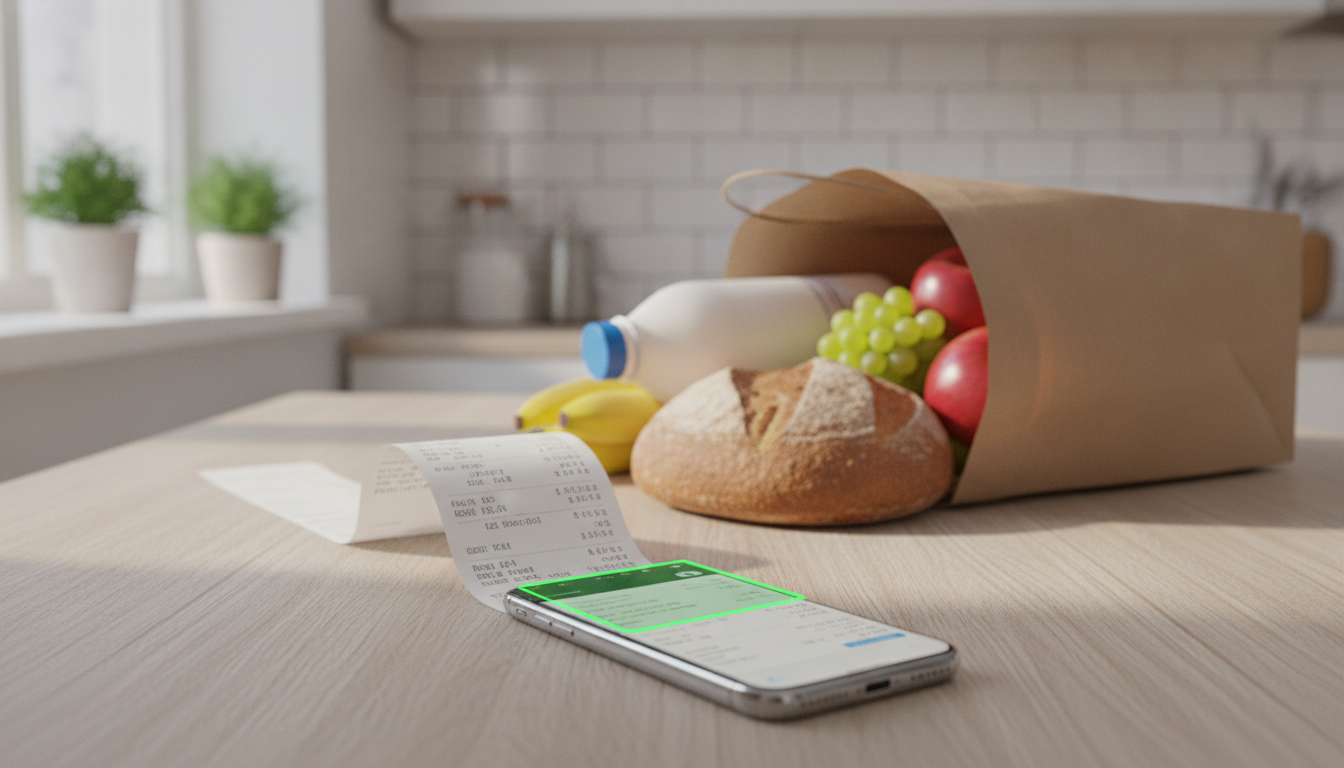
This is precisely why tools like Costmanager.online's receipt scanner exist. Instead of wrestling with thermal paper that's already turning blank, you simply snap a photo. The app uses optical character recognition (OCR) to extract all the details: product names (even those cryptic abbreviations), prices, dates, and even VAT lines like IVA or MwSt. For long receipts, you can often take multiple photos, and the app stitches them together. This turns a tedious chore into a quick capture.
When you're looking at your digital or physical receipts, make sure you can clearly identify:
- Date of purchase: Essential for tracking price changes over time.
- Store name: Aldi or Lidl.
- Individual product name and quantity: e.g., "SPAGHETTI 500G" or "EIER M 6X".
- Price paid for that item: Not just the subtotal.
Without clear, item-level data, your comparison is just guesswork.
Step 2: Identify Your Comparison Baskets
Now that you have your receipts, you need to build your core list of comparison items. Don't try to compare everything in the store. Start small, with items you buy frequently and that are easy to find in both Aldi and Lidl. Aim for 10-15 items that represent a significant portion of your regular grocery spending.
Illustrative Example Comparison Basket:
- Semi-skimmed milk (1L)
- White sandwich bread (500g loaf)
- Unsalted butter (250g)
- Medium free-range eggs (6-pack)
- Spaghetti (500g)
- Chopped tomatoes (400g can)
- Plain yogurt (500g tub)
- Bananas (per kg)
- Apples (per kg, specific variety if possible)
- Ground coffee (250g pack)
- Dishwasher tablets (standard pack size)
- Toilet paper (4-roll 3-ply pack)
- Chicken breast fillets (approx. 500g pack)
- Olive oil (500ml bottle)
For each item, be as specific as possible about the brand, size, and any other relevant details (e.g., organic, free-range). If you find that one store only sells 1.5L milk and the other only 1L, you'll need to calculate the unit price (price per litre) to make a fair comparison. The same goes for items sold by weight like fruit and vegetables – track the price per kilogram.
Step 3: Record and Track Prices Systematically
Once you have your basket, it's time to start tracking. Consistency here is essential. You can do this manually with a simple spreadsheet, or you can let an app do the heavy lifting.
Manual Method (Example Spreadsheet Structure):
| Item | Date | Store | Price | Unit Price | Notes (e.g., on offer) |
|---|---|---|---|---|---|
| Semi-skimmed Milk (1L) | 2024-03-01 | Aldi | €0.99 | €0.99/L | Standard price |
| Semi-skimmed Milk (1L) | 2024-03-02 | Lidl | €1.05 | €1.05/L | Standard price |
| Semi-skimmed Milk (1L) | 2024-03-08 | Aldi | €0.95 | €0.95/L | Weekly offer |
| Spaghetti (500g) | 2024-03-01 | Aldi | €0.89 | €1.78/kg | Standard price |
| Spaghetti (500g) | 2024-03-02 | Lidl | €0.95 | €1.90/kg | Standard price |
This manual approach works, but it takes time. You'll be spending a fair bit of time typing out item names and prices from your receipts. This is where a dedicated app like Costmanager.online truly shines. After you scan your receipt, it automatically identifies items and prices. The app gives you item-level spending insights by category and, crucially, a price history per product across shops. This means you can see at a glance how much you paid for those specific spaghetti packs at Aldi versus Lidl over the last few months, and if the price has changed. This kind of automated tracking makes building your comparison data much easier and more reliable, allowing you to focus on the analysis rather than the data entry.
Step 4: Account for Promotions and Special Buys
When you're comparing prices, it's generally best to focus on the standard, everyday price of an item. Both Aldi and Lidl run weekly promotions, often referred to as 'Aldi Finds' or 'Lidl Surprises' for their non-food items, but also on groceries. These are fantastic for saving money in the short term, but they don't reflect the baseline cost of your shopping basket.
If you *always* buy a particular item only when it's on offer (e.g., a specific type of coffee that goes on sale every few weeks), then you can include that promotional price in your comparison, but make a clear note of it. Otherwise, try to capture the regular price. This will give you a more accurate long-term picture of which store is consistently cheaper for your staples. For example, if Aldi has milk at €0.99 most weeks, but Lidl drops it to €0.89 one week, that's a temporary win for Lidl. But if Aldi consistently offers it at €0.99 while Lidl's regular price is €1.05, Aldi is the long-term winner for that item.
Step 5: Consider Quality and Personal Preference
Price isn't the only factor when you're shopping. Sometimes, a slightly higher price is worth it for better quality or simply because you prefer one brand's version of a product over another. For example, you might find Lidl's instant coffee tastes better to you than Aldi's, even if it's €0.10 more expensive. Or perhaps Aldi's fresh produce selection looks consistently better in your local store.
Don't be afraid to factor your personal preferences into your final decision. The goal isn't just to save every last cent, but to get the best value *for you*. If a product difference (taste, texture, ethical sourcing, packaging) makes one store's version superior in your eyes, that's a perfectly valid reason to choose it, even if it's not the absolute cheapest. Your data helps you make an informed decision, not a purely robotic one.
Beyond Just Prices: The Hidden Costs and Benefits
Comparing item prices is a great start, but a truly fair comparison of Aldi vs Lidl prices also needs to look at the bigger picture. Shopping isn't just about the numbers on the shelf. Consider these other factors:
- Travel Time and Fuel Costs: How far is each store from your home or work? A slightly cheaper basket at a store that's twice as far away might actually cost you more in fuel or public transport fares and, crucially, your time.
- Shopping Experience: Do you prefer the layout of one store over the other? Are the queues generally shorter? Is it easier to find what you need? A less stressful shopping trip might be worth a few extra cents.
- Stock Availability: Is one store constantly out of stock of your favourite items? Nothing is more frustrating than making a trip only to find half your list is unavailable.
- Non-Food Items (The Middle Aisle): Both stores are famous for their weekly special buys in the middle aisle. While these aren't part of your core grocery comparison, they can sometimes influence your overall perception of value. If you regularly pick up useful household items, tools, or clothing from one store's specials, that's a benefit to consider.
By using an app like Costmanager.online for all your receipts, you're not just tracking grocery prices; you're also building a comprehensive picture of all your spending. This allows you to see the true cost of your overall shopping habits, not just the price of a single product. You can even create budgets for different spending categories and set price alerts for specific products to always get the best deal, if you upgrade to Costmanager.online Pro.
Key Takeaways
- Directly comparing Aldi and Lidl requires consistent, item-level tracking of your actual purchases.
- Focus on a 'basket' of 10-15 identical or near-identical staple products.
- Use unit prices (per kg, per litre) for fair comparison when sizes differ.
- Prioritise regular prices over temporary promotions for long-term insights.
- Don't forget to factor in non-price elements like travel, convenience, and personal preference.
- Receipt scanning apps like Costmanager.online make this tracking process much easier and more accurate.
Making Your Own Data Work For You
Stop relying on anecdotes or vague memories. The most powerful tool for determining which supermarket wins the Aldi vs Lidl prices battle is your own shopping data. By systematically tracking what you buy and how much you pay, you gain real insights into your spending habits and genuinely empower yourself to save money. It might take a little effort upfront to set up your comparison basket, but once you're in the habit of scanning your receipts, the data flows effortlessly. You'll quickly see patterns, spot the true deals, and confidently know which store offers the best value for *your* groceries. This isn't just about saving money; it's about smart, informed shopping.
Frequently asked questions
Is Aldi generally cheaper than Lidl?
It's difficult to say definitively without comparing your specific shopping list. Both Aldi and Lidl are budget supermarkets, and their prices can fluctuate based on region, promotions, and specific products. The only way to truly know is to compare prices for the items you regularly buy.
How can I compare prices between supermarkets fairly?
The fairest way is to create a consistent 'basket' of 10-15 staple items you buy frequently. Track the prices of these identical or near-identical products (considering unit prices) at each supermarket over several weeks, focusing on regular prices rather than temporary sales.
Do Aldi and Lidl have the same products?
No, they primarily stock their own private-label brands, which are distinct. While they offer similar product categories (e.g., milk, bread, pasta), the specific brands, recipes, and sometimes even package sizes will differ between Aldi's and Lidl's offerings.
Can price tracking apps help with comparing Aldi and Lidl?
Yes, apps like Costmanager.online are excellent for this. They allow you to scan receipts, which automatically extracts item-level prices and dates. This builds a price history for each product across different stores, making it easy to see where you paid less for specific items over time.