
Mastering Price Per Unit Comparison at the Supermarket
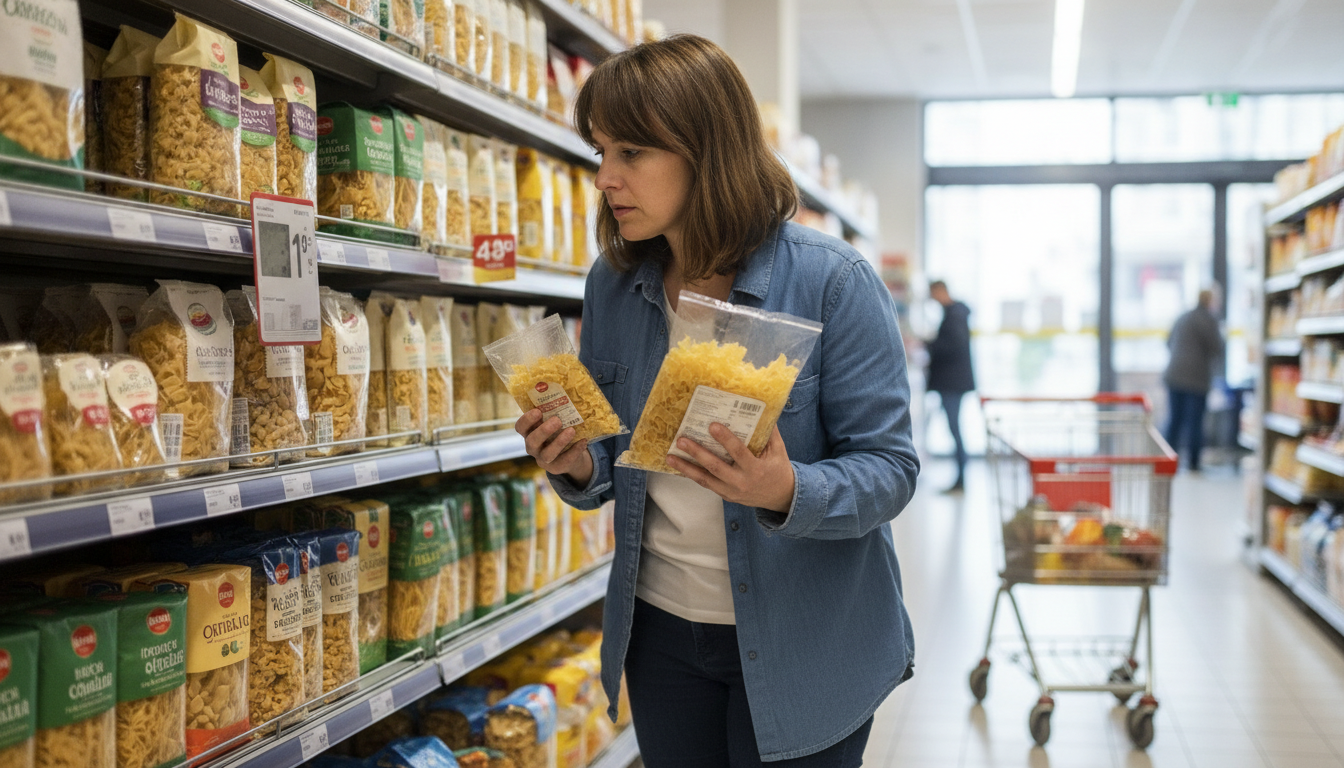
You're standing in front of the coffee aisle at Carrefour, staring at two bags of your favourite brand. One is 250g for €3.49, the other is 500g for €6.79. Which one's the better deal? Your brain starts doing mental gymnastics, but the numbers just seem to blur, and you grab the bigger one, hoping you've saved a few cents. Sound familiar?
TL;DR: Supermarkets often use confusing package sizes and 'special offers' to make it hard to tell the true value of a product. The best way to cut through the noise and genuinely save money is to compare the 'price per unit'. This means knowing the cost per kilogram, per litre, or per 100 grams. This article will show you exactly how to do that, spot common supermarket tricks, and use tools like Costmanager.online to track your savings over time.
Supermarket Size Tricks: Why They Confuse Us
Supermarkets are masters of subtle persuasion. Their goal is to make you spend more, and they have a whole arsenal of psychological tactics. One of the most effective, and frustrating, is manipulating package sizes and pricing displays. They don't want you making an easy Aldi vs Lidl prices compare in your head.
- The 'Value Pack' Illusion: You often see larger packages branded as 'family size' or 'value pack'. We're conditioned to believe bigger is always cheaper. But often, it's not. A 1kg bag of flour might be cheaper per kg than a 2kg bag, or a pack of 8 yoghurts could cost more per pot than a pack of 4.
- Odd Sizes: Why are eggs sold in packs of 6, 10, or 12? Why is olive oil sometimes 750ml, other times 1 litre, or even 2 litres? These varied sizes make direct comparisons difficult. You can't just compare €2.50 to €3.50; you need to know what you're actually getting for that money.
- Confusing Discounts: 'Buy one get one free', '3 for the price of 2', '20% extra free'. These sound great, and sometimes they are. But sometimes, the original price was inflated, or the 'extra free' still makes the unit price higher than a competitor's standard offering. And if you don't need three of something, buying them isn't saving money at all.
- Visual Cues: Supermarkets use clever shelf placement, colourful signs, and even the design of packaging to draw your eye away from the critical detail: the actual cost of what's inside.
These tactics aren't just annoying; they cost you real money. They exploit our mental shortcuts, making us assume rather than calculate. But once you understand the simple concept of price per unit, you gain a superpower against these tricks.
What is Price Per Unit Comparison and How Does it Work?
Price per unit comparison is the most reliable way to figure out the true cost-effectiveness of a product. Instead of looking at the total price of a package, you look at its price relative to a standard unit of measurement – usually per kilogram (kg), per litre (L), per 100 grams (g), or per 100 millilitres (ml). Sometimes, for individual items like apples or lightbulbs, it might be 'per piece' or 'each'.
Think of it this way: if you're buying petrol, you don't care about the total cost of filling your tank; you care about the price per litre. Groceries should be no different.
The calculation is simple:
Total Price / Total Quantity = Price Per Unit
Let's take our coffee example:
- Bag A: 250g for €3.49
- Bag B: 500g for €6.79
To compare them fairly, let's find the price per 100g (a common unit for smaller food items):
- Bag A: (€3.49 / 250g) * 100g = €1.396 per 100g (approximately €1.40)
- Bag B: (€6.79 / 500g) * 100g = €1.358 per 100g (approximately €1.36)
In this illustrative example, Bag B, the larger one, *is* slightly cheaper per 100g. But the difference is small. Without this comparison, you might just assume, or pick the smaller one for convenience. The point is, you *know* now.
Reading the Shelf Label: Your First Line of Defence
Thankfully, in most European supermarkets, the price per unit is usually displayed on the shelf label, often in smaller print next to the main product price. Look carefully! You might see it as '€X.XX/kg', '€X.XX/L', '€X.XX/100g', or '€X.XX/100ml'.
- Where to look: It's usually below or to the side of the main price and product name. Sometimes it's tiny, so you might need to squint or get a bit closer.
- Common units: For solids, it's often per kg or 100g (e.g., pasta, cheese, meat). For liquids, it's typically per litre or 100ml (e.g., milk, juice, oil).
- What if it's missing? Sometimes, especially with 'special offer' signs or items that don't fit a standard unit (like a multi-pack of dish sponges), the unit price might be missing or hard to find. Don't let this deter you. It's a red flag that you need to do a quick mental calculation.
When Unit Price Isn't Obvious: Manual Calculation
If the supermarket isn't helping you out, you can quickly do the math yourself. It's not rocket science, just simple division.
Let's say you're comparing two brands of washing liquid at Rewe:
- Product 1: 1.5 litres for €4.50.
- Product 2: 2.2 litres for €6.20.
To compare, let's calculate the price per litre:
- Product 1: €4.50 / 1.5 L = €3.00 per litre
- Product 2: €6.20 / 2.2 L = €2.82 per litre (approximately)
Here, Product 2 is the better deal per litre, even though it has a higher overall price. This quick calculation saved you money!
After you've made your purchases, you can easily track these details with an app like Costmanager.online. Simply snap a picture of your scontrino or Kassenbon – even long receipts from Aldi or a faded Lidl thermal printout. Our system, powered by Google's Gemini AI for solid receipt image and PDF reading (with on-device OCR as a fallback), digitises your purchase. While you're reviewing and approving your items before they're saved to your account, you can see not just the total price, but also verify the unit price you paid. This builds a powerful historical record of your spending, helping you learn and spot trends. Scan your first receipt today!
Common Pitfalls and How to Avoid Them
Even with unit price knowledge, there are still a few traps you need to be aware of.
The "Bigger is Better" Trap
As we've discussed, this is the most common misconception. Always check the unit price, even on what looks like an obvious 'deal'. Sometimes the smaller package is on a genuine, unnoticed sale, or the larger package simply isn't priced competitively. Remember, supermarkets *want* you to assume, not check.
"Special Offer" Illusion
An item advertised with a big, flashy 'Special Offer' sign might grab your attention, but always compare its unit price to similar, non-offer items. Sometimes the 'special' price is still higher per unit than the supermarket's own-brand equivalent, or even higher than the regular price of a competitor. Don't let the marketing hype distract you from the numbers.
Different Brands, Different Qualities
Unit price comparison is excellent for identical or very similar products. However, it doesn't account for quality differences. A premium brand of organic pasta might have a higher unit price than a budget brand, but you might prefer its taste or ethical sourcing. Use unit price as your baseline for value, then factor in quality and preference. It helps you make an informed choice, not just a cheap one.
The 'Odd Unit' Problem
Sometimes you'll encounter items where comparing unit prices feels tricky, like kitchen roll (sold by roll, but rolls have different sheet counts), or sometimes fresh produce (sold by piece vs. by weight). In these cases, try to normalise. For kitchen roll, calculate price per sheet if possible. For produce, estimate weight for piece-sold items if you can, or simply compare total cost for the exact quantity you need. It's about getting as close to an 'apples to apples' comparison as possible.
Beyond the Aisle: Tracking Unit Prices Over Time
Understanding unit price at the point of sale is powerful, but tracking it over time unlocks even deeper savings and insights. Prices fluctuate constantly due to inflation, promotions, and supply chain issues. What was a good deal last month might not be today.
This is where Costmanager.online really shines. After you've scanned your receipts and reviewed the digitised items, you build a personal database of your grocery purchases. This isn't just about total spending; it's about item-level detail.
- Price History Per Product: The app automatically tracks the price you've paid for specific products across different shops and over time. You can see if that 500g bag of coffee is really getting more expensive, or if the unit price of your favourite olive oil is creeping up. This helps you identify genuine inflation affecting your specific shopping basket, not just general market trends. Want to learn more about tracking your spending? Check out our article on how to track grocery spending or for deeper analysis, spending by category.
- Shopping List That Finds the Cheapest Shop: Once you have a price history, Costmanager.online can tell you which local supermarket (from your scanned receipts) had the best unit price for items on your shopping list. This is incredibly powerful for saving on your regular purchases.
- Price Alerts: With a Pro subscription, you can set price alerts for specific products. If the unit price drops below a certain threshold at a shop you frequent, you'll get a notification, allowing you to stock up when it's truly a good deal.
It's about turning your receipts from forgotten scraps of paper into actionable data that empowers your budget.
A Checklist for Smart Unit Price Shopping
| Action | Why It Matters |
|---|---|
| Always check the shelf label for unit price. | The easiest way to compare value quickly. |
| Don't assume bigger is cheaper. | Supermarkets often use larger packs to hide less competitive unit prices. |
| Be wary of "special offer" signs. | Always compare the unit price of the 'deal' to regular-priced alternatives. |
| Calculate manually if unit price is missing. | A quick division gives you clarity and control. |
| Factor in quality and preference. | Unit price is a value baseline; your personal preferences still matter. |
| Use Costmanager.online to track prices. | Build a personal price history to spot trends and find the cheapest shops over time. |
Illustrative Example: The Pasta Dilemma
Let's imagine you're at Esselunga looking for your favourite brand of spaghetti. Here are the options:
| Product | Weight | Price | Price Per 100g | Price Per kg |
|---|---|---|---|---|
| Spaghetti (Standard) | 500g | €0.99 | €0.198 | €1.98 |
| Spaghetti (Family Pack) | 1kg | €1.89 | €0.189 | €1.89 |
| Spaghetti (Organic) | 500g | €1.49 | €0.298 | €2.98 |
| Spaghetti (Value Brand) | 500g | €0.85 | €0.170 | €1.70 |
From this table, you can clearly see:
- The 'Family Pack' is indeed slightly cheaper per kg than the standard 500g pack.
- The 'Organic' option is significantly more expensive per unit, which you might accept for its benefits.
- The 'Value Brand' is the cheapest per unit, if quality isn't your primary concern.
Without looking at the 'Price Per 100g' or 'Price Per kg' columns, you might just grab the standard 500g pack without realising the 'Family Pack' or 'Value Brand' offer better unit value.
Key Takeaways
- Supermarket pricing strategies often obscure the true cost of items.
- Price per unit comparison (cost per kg, litre, 100g, etc.) is the most accurate way to evaluate value.
- Always look for unit prices on shelf labels, and calculate manually if necessary.
- Don't assume larger packs or 'special offers' are always the best deal.
- Costmanager.online helps you track unit prices over time and across different shops for smarter shopping.
Your Smart Shopping Assistant
Conscious shopping isn't just about finding the lowest total price; it's about understanding true value. By mastering price per unit comparison, you take back control from clever marketing and make truly informed decisions. This simple habit, combined with the power of a tool like Costmanager.online, transforms your grocery trips. You'll stop guessing, start saving, and build a clearer picture of your spending, making every euro count.
Frequently asked questions
What is unit pricing?
Unit pricing is the cost of a product based on a standard unit of measure, like per kilogram, per litre, or per 100 grams. It helps shoppers compare the true value of different sized products or brands.
Why is unit price comparison important for grocery shopping?
It's crucial because supermarkets often use varying package sizes and promotional offers that make direct price comparisons difficult. Unit pricing cuts through these tricks, showing you which product truly offers the best value for your money.
Where can I find the unit price in a European supermarket?
Most European supermarkets display the unit price on the shelf label, usually in smaller print beneath or next to the main product price. Look for indications like '€/kg', '€/L', or '€/100g'.
Can Costmanager.online help me with price per unit comparison?
Yes, after you scan your receipts with Costmanager.online, you can review digitised items and see the unit price you paid. Over time, it builds a history of unit prices for products you buy, helping you track changes and find the cheapest shops for your regular items.