Understanding VAT on Supermarket Receipts in Europe
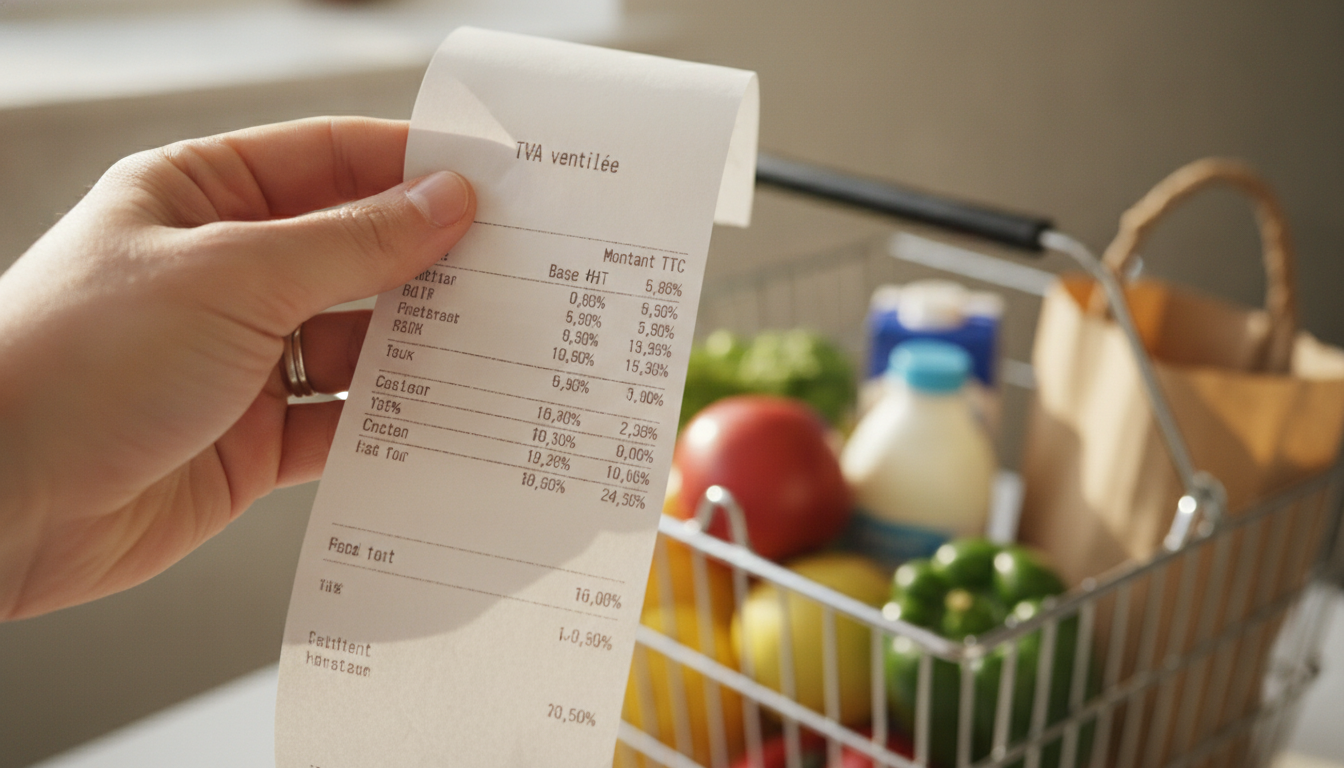
You've just finished a shop at Carrefour, lidl, or Edeka, and you're left with that familiar, often impossibly long thermal paper receipt, your Kassenbon or scontrino. As you fold it, you notice a section with cryptic letters like 'IVA', 'MwSt', or 'TVA' followed by percentages and amounts. Ever wondered what these mean? You're not alone. Many of us just glance at the total and move on, but understanding these VAT lines on your European supermarket receipts can actually tell you a lot about your spending and even help you budget smarter.
TL;DR: European supermarket receipts include VAT (Value Added Tax) details like IVA (Italy), MwSt (Germany), or TVA (France). These taxes vary by country and product category. Understanding them helps you see the true cost of items and manage your budget. Costmanager.online uses advanced AI to automatically read and categorise these details, giving you clear insights without the manual deciphering.
Key Takeaways
- VAT, or Value Added Tax, is a consumption tax applied to most goods and services in the European Union.
- Different countries use different abbreviations for VAT, like IVA (Italy, Spain), MwSt (Germany, Austria), and TVA (France, Belgium).
- VAT rates vary significantly across Europe and even within a single country, with essential goods often having reduced rates.
- Supermarket receipts typically show VAT totals broken down by rate, sometimes per item.
- Understanding VAT helps you identify the actual price of goods and better track spending by category.
- Apps like Costmanager.online can automatically extract and organise VAT data from your scanned receipts, simplifying financial tracking.
The Mystery of VAT on Supermarket Receipts
Let's face it: after a big grocery shop, the last thing you want to do is pore over a receipt trying to understand tax codes. Most receipts are a jumble of abbreviations for products you bought, often with the total at the very bottom. But if you look closer, usually somewhere near the end, you'll find a section dedicated to VAT. This section tells you how much tax you paid on your purchases, broken down by different rates.
Why should you care? Because VAT isn't a flat rate on everything. Governments often apply different rates to different types of goods. Basic necessities like fresh food or water might have a reduced VAT rate, while non-essential items or luxury goods will carry a standard (higher) rate. Knowing this helps you understand the true cost of what you're buying and where your money is really going.
Decoding VAT Abbreviations Across Europe
One of the first hurdles is the sheer variety of terms used for VAT. What's called 'IVA' in Rome is 'MwSt' in Berlin and 'TVA' in Paris. It's all the same tax, just with different names.
Here's a quick guide to common VAT abbreviations you might spot on your European supermarket receipts:
| Country/Region | Common VAT Abbreviation | Full Name (Local Language) | Meaning (English) |
|---|---|---|---|
| Italy, Spain, Portugal | IVA | Imposta sul Valore Aggiunto (IT), Impuesto sobre el Valor Añadido (ES) | Value Added Tax |
| Germany, Austria | MwSt | Mehrwertsteuer | Value Added Tax |
| France, Belgium, Luxembourg | TVA | Taxe sur la Valeur Ajoutée (FR), Belasting over de Toegevoegde Waarde (NL) | Value Added Tax |
| Netherlands | BTW | Belasting Toegevoegde Waarde | Value Added Tax |
| Poland | VAT | Podatek od Towarów i Usług | Value Added Tax |
| Sweden, Denmark, Norway | Moms | Mervärdesskatt (SE), Merverdiafgift (DK), Merverdiavgift (NO) | Value Added Tax |
| Greece | ΦΠΑ (FPA) | Φόρος Προστιθέμενης Αξίας | Value Added Tax |
| Hungary | ÁFA | Általános Forgalmi Adó | Value Added Tax |
| Czech Republic, Slovakia | DPH | Daň z přidané hodnoty (CZ), Daň z pridanej hodnoty (SK) | Value Added Tax |
| Croatia | PDV | Porez na dodanu vrijednost | Value Added Tax |
You'll often see these abbreviations followed by a percentage, like 'IVA 4%', 'MwSt 7%', or 'TVA 20%'. This tells you the specific rate applied.
Illustrative Examples of VAT Rates in European Supermarkets
It's vital to remember that VAT rates are set by individual countries and can change. The examples below are purely illustrative and are not current, definitive rates. They are meant to show you the *type* of variations you might encounter.
Illustrative Example: German Kassenbon (Rewe, Edeka)
In Germany, you'd typically see a standard rate and a reduced rate.
- Standard Rate (e.g., 19%): Applied to most non-food items, alcohol, tobacco, and many processed foods.
- Reduced Rate (e.g., 7%): Often applies to basic foodstuffs like fresh fruits, vegetables, meat, milk, bread, as well as books and public transport.
Your Rewe receipt might show a breakdown like this at the bottom:
MwSt 19%: 12.50 EURMwSt 7%: 5.25 EURTotal VAT: 17.75 EURThis means you paid €12.50 in tax on items subject to 19% VAT, and €5.25 on items with 7% VAT.
Illustrative Example: Italian Scontrino (Esselunga, Conad)
Italy also has multiple VAT rates, including standard, reduced, and sometimes super-reduced.
- Standard Rate (e.g., 22%): Applies to most goods and services.
- Reduced Rate (e.g., 10%): Often applies to some foodstuffs, hotel stays, certain restaurant services, and energy.
- Super-Reduced Rate (e.g., 4% or 5%): Can apply to very basic necessities like certain fresh foods, some pharmaceutical products, or books.
On an Esselunga receipt, you might see:
IVA 22%: 8.70 EURIVA 10%: 3.40 EURIVA 4%: 1.10 EURTotal IVA: 13.20 EURAgain, this shows a clear breakdown of how much tax you paid at each rate.
Illustrative Example: French Ticket de Caisse (Carrefour, Auchan)
France has a similar tiered system.
- Standard Rate (e.g., 20%): Most goods and services.
- Reduced Rate (e.g., 10%): Certain processed foods, catering, take-away food, transport, hotels.
- Super-Reduced Rate (e.g., 5.5%): Essential food products, water, non-alcoholic beverages, books.
- Special Rate (e.g., 2.1%): Certain medicines.
A Carrefour receipt might list:
TVA 20%: 9.15 EURTVA 10%: 4.30 EURTVA 5.5%: 2.05 EURTotal TVA: 15.50 EURThe key takeaway here is that no matter the country, the system is designed to show you which portion of your total bill went towards tax, and at what rate.
Where to Find VAT Information on Your Receipt
This can be the trickiest part, especially with those extra-long receipts from discounters like Aldi or Lidl. Here's a general guide:
- The Bottom Section: Most commonly, the VAT breakdown is located at the very end of the receipt, after all the individual items and the subtotal.
- Line-Item Detail: Sometimes, especially on older systems or smaller shops, you might see a small letter or number next to each item indicating its VAT rate category. However, this is less common in large supermarkets.
- Grouped by Rate: The most prevalent method in larger supermarkets is to group all items by their applied VAT rate and then provide a subtotal and the corresponding VAT amount for each rate. For example, 'Total 7%' followed by 'MwSt 7%'.
- Faded Thermal Paper: This is a common problem! Thermal paper, especially from Aldi or Lidl, fades quickly. The text can become illegible within weeks, making it impossible to read those important VAT lines. This is where digitising your receipts quickly becomes a huge advantage.
Why You Should Pay Attention to VAT
Beyond satisfying curiosity, understanding VAT lines offers several practical benefits for the average shopper:
- True Cost Awareness: When you see an item priced at €10, you know a portion of that is tax. Understanding the VAT rate helps you grasp the actual cost of the product itself, separate from government levies.
- Budgeting & Spending Insights: If you're trying to cut down on discretionary spending, knowing which items carry higher VAT rates can subtly influence your choices. For example, comparing a high-VAT luxury item with a lower-VAT essential. Costmanager.online can help you track your spending by category, and knowing VAT rates adds another layer of insight.
- Identifying Errors: While rare in modern supermarkets, sometimes an item might be incorrectly categorised for VAT. If you notice a standard rate applied to a clearly reduced-rate item, you could query it (though this is usually more relevant for businesses).
- Business Expenses (Limited): If you're self-employed and occasionally buy groceries that are genuinely business expenses (e.g., for a catering business or client meetings), knowing the VAT breakdown is essential for your accounting. However, for most personal grocery shopping, VAT is simply part of the price you pay.
How Costmanager.online Handles VAT on Supermarket Receipts
This is where technology really shines. Trying to manually extract VAT data from a stack of faded Kassenbons is a nightmare. This is exactly the kind of tedious task Costmanager.online was built to solve.
When you use the app to capture your receipts – whether it's a quick snap of a short scontrino or multiple photos for a super-long Aldi slip – Costmanager.online gets to work. Our advanced AI service, powered by Google's Gemini, processes the images or PDFs you submit. This sophisticated AI is designed to read and interpret all the intricate details on your receipts, including those tricky VAT lines (IVA, MwSt, TVA, etc.), product names, prices, and quantities.
The processing happens off-device, ensuring accurate and reliable data extraction even from messy or faded receipts. Once the AI has done its job, the extracted information, including the VAT breakdown, is presented to you for review. Nothing is saved to your account until you approve it. This means you can quickly check everything, make any minor edits if needed, and then approve the data to be saved to your personal spending history.
Costmanager.online doesn't just extract the numbers; it helps you make sense of them. By categorising your spending and showing you price histories, you gain a clearer picture of your personal grocery inflation and where your money is truly going. Imagine seeing exactly how much VAT you've paid on fresh produce versus packaged goods over a month! This insight empowers you to make more informed purchasing decisions and helps with your grocery spending tracking.
Ready to stop guessing and start understanding your spending? Give the Costmanager.online receipt scanner a try – it handles all the fiddly details so you don't have to. You get a 3-month free trial to experience how easy it is to manage your supermarket receipts and track your prices.
Your VAT Guide for Smarter Shopping
VAT on supermarket receipts isn't just a government formality; it's a piece of your financial puzzle. Taking a moment to understand what those IVA, MwSt, or TVA lines mean can give you a clearer picture of your spending habits and the true cost of your groceries. With tools like Costmanager.online, you don't even have to do the heavy lifting of deciphering them yourself. Just snap, approve, and gain valuable insights into your European shopping.
Frequently asked questions
Why do VAT rates differ for groceries in Europe?
VAT rates vary because European Union countries have the flexibility to set their own rates within certain limits, and they often apply reduced rates to essential goods like basic foodstuffs. This is generally done to make necessities more affordable for citizens, while non-essential items or luxury goods carry the standard, higher VAT rate.
What do IVA, MwSt, and TVA mean on my supermarket receipt?
These are simply different abbreviations for Value Added Tax (VAT) in various European languages. IVA is common in countries like Italy and Spain, MwSt (Mehrwertsteuer) is used in Germany and Austria, and TVA (Taxe sur la Valeur Ajoutée) is found in France and Belgium. They all refer to the consumption tax applied to your purchases.
Can I reclaim the VAT shown on my supermarket receipts?
For most personal supermarket purchases, you cannot reclaim the VAT. VAT refunds are typically only available for businesses that are VAT registered and purchasing goods or services for business purposes, or for tourists leaving the EU on eligible purchases from specific shops. Personal grocery shopping is generally not eligible for VAT reclaim.
How does Costmanager.online help me understand VAT on my receipts?
Costmanager.online uses an advanced AI service, powered by Google's Gemini, to automatically read and extract all details from your scanned receipts, including the various VAT lines. It then presents this information clearly, allowing you to see the VAT breakdown without manually deciphering your receipt, providing better insight into your spending.