Stop Impulse Buying at Supermarket with Receipt Data
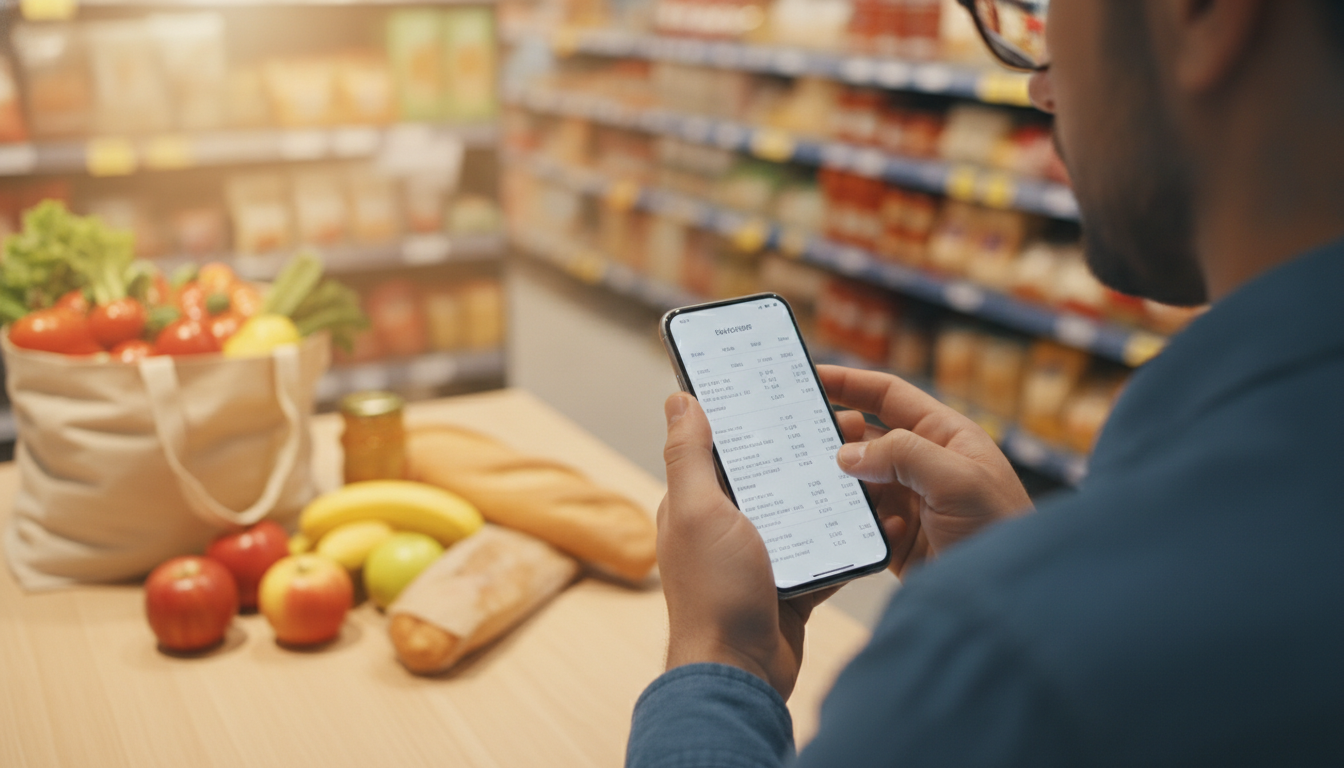
You're unpacking your shopping bags, and there it is: that €3 box of fancy biscuits you didn't need, or the "special offer" chocolate bar you grabbed at the checkout. It wasn't on your list, but it ended up in your basket, just like the other spontaneous additions that add up over weeks. This sneaky spending, often called impulse buying at the supermarket, can quietly erode your budget, making you wonder where all your grocery money goes. The good news? The solution might be hidden in plain sight: your supermarket receipts.
TL;DR: Impulse purchases can significantly inflate your grocery bill. Instead of guessing, use the detailed data on your receipts to pinpoint exactly what you're buying spontaneously. Costmanager.online helps you easily scan, categorise, and analyse this data, turning cryptic Kassenbons into actionable insights. By understanding your personal impulse patterns, you can develop effective strategies to reduce unplanned spending and save real money.
What is Impulse Buying, Anyway?
Impulse buying isn't just about buying something you didn't plan for; it's often driven by immediate gratification, emotions, or external triggers within the shop. Supermarkets are masters at creating these triggers. Think about the enticing displays at the end of aisles, the strategically placed sweets near the checkout, or the "buy one get one free" offers on things you don't actually need.
It's different from a forgotten item. If you meant to buy milk but forgot to write it down, that's not really an impulse purchase. An impulse buy is more like seeing a new flavour of crisps you've never tried, or a magazine with a catchy headline, and tossing it into your trolley without a second thought. It feels good in the moment, but often leads to buyer's remorse later.
Planned vs. Impulse: Spot the Difference
| Characteristic | Planned Purchase | Impulse Purchase |
|---|---|---|
| Decision Process | Deliberate, pre-meditated, on list | Spontaneous, spur-of-the-moment |
| Need Basis | Genuine need or planned want | Often perceived need, emotional desire |
| Research | Might compare prices, read reviews | Little to no research, quick decision |
| Impact on Budget | Accounted for, within budget | Often exceeds budget, unexpected cost |
| Examples | Milk, bread, weekly fruit & veg | Trendy snack, checkout candy, "special offer" item not on list |
Your Receipt: A Hidden Goldmine for Fighting Impulse Buying at Supermarket
Most of us treat supermarket receipts as flimsy pieces of paper to be discarded. But these Kassenbons, scontrini, or tickets de caisse are actually detailed records of your shopping habits. They tell you exactly what you bought, when you bought it, and for how much. The problem? They're often long, printed on fading thermal paper, and full of abbreviations like "MOZZ BBL" (Mozzarella balls) or "APFELK" (Apple cake).
This is where an app like Costmanager.online becomes incredibly powerful. Instead of manually deciphering faded ink, you simply snap a photo (or multiple photos for those extra long Aldi receipts) or upload a PDF. Costmanager.online uses Google's Gemini AI service to accurately read and interpret every item, even the cryptic ones, and then categorises them for you.
It's important to understand that while Costmanager.online handles complex receipt reading with advanced AI, your data is treated with the utmost care. Receipts are processed by Google's Gemini AI service, and nothing is saved to your account until you review and approve it. Your data is never sold – it's exclusively for your personal spending insights.
Decoding the Cryptic Kassenbon
Imagine trying to identify every spontaneous purchase from a stack of paper receipts. It's nearly impossible. The abbreviations make it hard to tell exactly what "SCHOK M" was (Schoko Muffin? Schokoladenmilch?). With Costmanager.online, this isn't an issue. The app works to translate those abbreviations into understandable item names, so you can clearly see "Chocolate Muffin" rather than "SCHOK M".
Spotting the "Oops, I Bought That" Items
Once your receipts are scanned and the items are recognised, Costmanager.online automatically assigns categories. This is where the magic happens for tackling impulse buying. You might think you don't buy many snacks, but a quick look at your "Snacks & Sweets" category over a month might reveal a different story. These category insights are important for identifying patterns of spontaneous spending.
Step-by-Step: Using Your Receipt Data to Cut Impulse Buys
Step 1: Capture Every Receipt, Consistently
The first and most important step is to make sure every single grocery receipt gets scanned. Whether it's a small purchase from a local shop or a huge weekly haul from Carrefour, don't let it escape. Costmanager.online is designed to make this easy: just open the app, tap the scanner icon (available at https://costmanager.online/scanner), and take a picture. For very long receipts, like a 40cm Kassenbon from Rewe, the multi-photo feature lets you capture the whole thing in sections, and the app stitches it together. Don't worry about fading ink; the AI can often read even challenging thermal prints.
Step 2: Categorise and Review Your Spending
After scanning, Costmanager.online presents your receipt data. This is your moment to review and ensure everything is accurate and correctly categorised. Pay close attention to the categories that often house impulse buys: "Snacks," "Sweets," "Drinks (non-essential)," "Magazines," "Bakery (non-staple items like fancy pastries)," or even "Home & Kitchen (small gadgets)." If an item is miscategorised, you can easily correct it. Over time, you'll build up a clear picture of where your money is really going. For more on this, check out our guide on understanding your spending by category.
Step 3: Identify Your Impulse Triggers
With your categorised data, start looking for patterns. Are your impulse buys concentrated on certain days of the week? After a long day at work? When you're hungry? In specific shops? For example, you might notice a spike in chocolate bar purchases every Friday afternoon when you do your weekly shop at Lidl, or a sudden surge in fancy cheese purchases when you visit Esselunga on an empty stomach. Understanding these triggers is key to breaking the habit.
Step 4: Create a "No-Buy" List or a "Think Twice" List
Based on your insights, make a personal list of items or categories that are your Achilles' heel for impulse buying. This isn't about deprivation, but awareness. For some, it might be the entire "Snacks & Sweets" category. For others, it might be specific items like "trendy sparkling water" or "gourmet bread." When you encounter these items in the shop, your internal alarm can go off. Ask yourself: "Is this on my actual list? Do I genuinely need it?"
Step 5: use Price History for Smarter Decisions
Costmanager.online doesn't just track what you buy; it also builds a price history for individual products across different shops. This feature is a powerful defence against impulse buys disguised as "deals." That "special offer" on coffee pods might not be so special if your price history shows it was cheaper last month, or is routinely cheaper at another shop like Conad. Before an impulse buy, you can quickly check if it's a genuine saving or just clever marketing. This helps you question the perceived urgency of a spontaneous purchase. Our personal grocery inflation tracker blog post goes into more detail on using this data.
Beyond the Receipt: Broader Strategies to Avoid Impulse Buys
While receipt data provides invaluable insights, pairing it with broader strategies makes you even more resilient against impulse buying:
- Always Shop with a List: Costmanager.online's built-in shopping list feature is fantastic here. You can add items as you think of them, and it even helps you find the cheapest shop for your entire list. Stick to it rigorously.
- Never Shop Hungry: This is an oldie but a goodie. When you're hungry, everything looks delicious, and your willpower plummets. Eat a meal or a substantial snack before you head to the supermarket.
- Avoid Aisles That Tempt You: If you know the biscuit aisle is your downfall, try to walk past it quickly, or even skip it entirely if you don't have anything specific to buy there.
- Set a Time Limit: Rushing through your shop can sometimes lead to grabbing things without thought. However, for some, a strict time limit can prevent excessive browsing and impulsive decisions. Experiment to see what works for you.
- Pay with Cash: If you're really struggling, using a set amount of cash can enforce a hard limit on your spending, making impulse buys impossible once the cash is gone.
Key Takeaways
- Your supermarket receipts contain valuable data about your spending habits, including impulse purchases.
- Costmanager.online uses Google's Gemini AI to accurately scan and categorise items from your receipts, even cryptic abbreviations and long slips.
- Consistent receipt scanning allows you to identify personal impulse buying patterns and triggers.
- Categorised spending insights help you pinpoint which items and categories are most prone to spontaneous buys.
- Use price history data to discern real deals from marketing ploys, avoiding impulse purchases driven by false urgency.
- Combine data-driven insights with practical shopping strategies like using a list and avoiding shopping hungry.
Turning Data into Savings
Fighting impulse buying isn't about depriving yourself; it's about making conscious choices and taking control of your money. By harnessing the power of your receipt data with tools like Costmanager.online (https://costmanager.online/), you gain clarity and insights that traditional budgeting methods often miss. You move from guessing where your money went to knowing exactly, item by item. This knowledge empowers you to build smarter shopping habits, resist those tempting checkout lures, and ultimately, put more money back into your pocket for the things that truly matter.
Frequently asked questions
How does scanning receipts help me reduce impulse buying?
Scanning receipts with Costmanager.online allows you to accurately track every item you purchase. By reviewing categorised spending over time, you can easily identify specific products or categories that frequently appear as unplanned, spontaneous buys, revealing your personal impulse patterns.
Is my receipt data safe and private with Costmanager.online?
Yes, your data is treated with high priority. Costmanager.online uses Google's Gemini AI service to process your receipt images, but nothing is saved to your account until you review and approve it. Your data is never sold and is used solely to provide you with personal spending insights.
Can Costmanager.online track prices for specific impulse items I'm trying to avoid?
Absolutely. Costmanager.online builds a price history for individual products you buy across different shops. This means you can see if that 'special offer' on a common impulse item is actually a good deal, helping you make more informed decisions and resist purchases based on perceived urgency.
What if my impulse buys are always different items, not the same few things?
Even if the specific items vary, Costmanager.online's category tracking will still highlight patterns. You might notice a consistent overspending in categories like 'Snacks & Sweets' or 'Non-essential Home Goods,' even if the exact product changes. This helps you address the broader tendency rather than just individual items.