
Organic vs Regular: Measuring the Real Price Difference
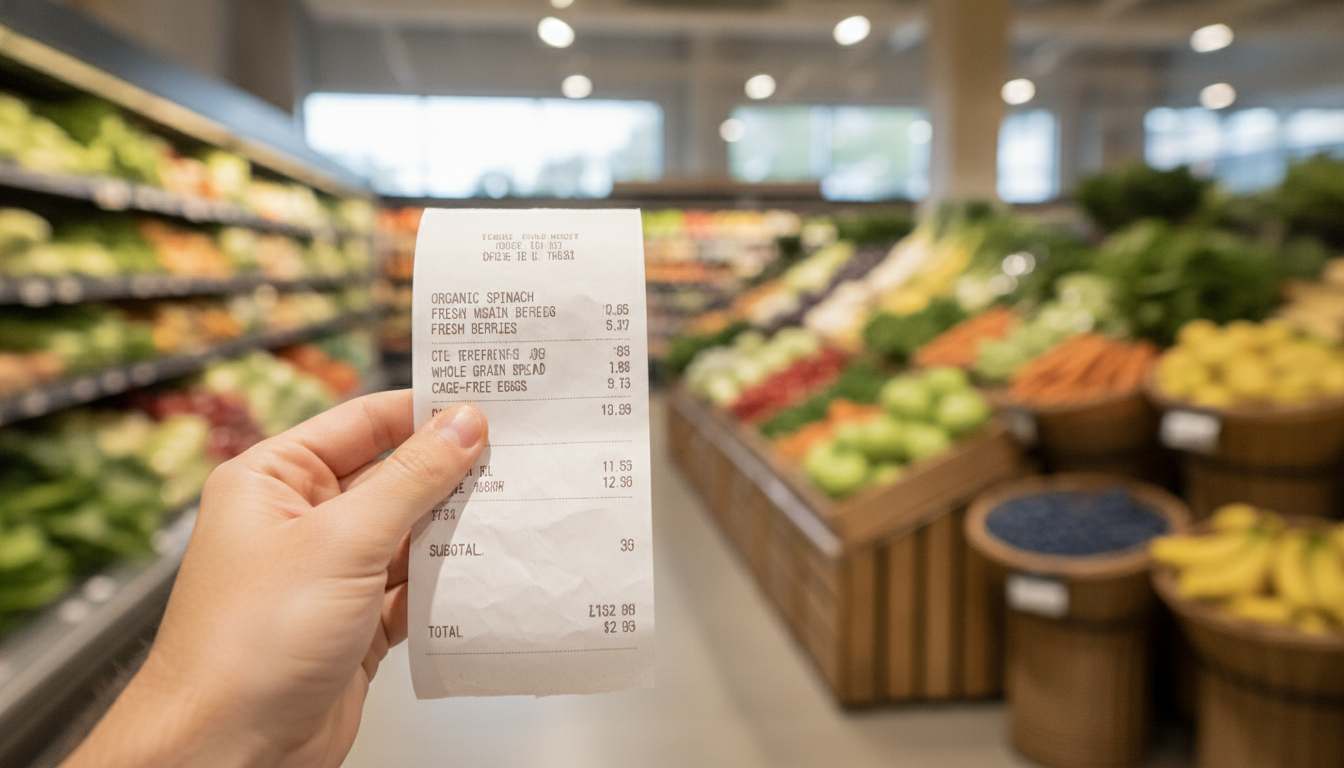
You’re standing in the supermarket aisle, a pack of organic Bio-Eier in one hand, a conventional carton in the other. Both look pretty similar, but the price tags tell a different story. "Is the extra cost for organic really worth it?", you wonder, "And how much *more* is it, truly?" This isn't just a fleeting thought; it's a constant dilemma for many European shoppers trying to balance budget with values. The perceived price gap between organic and regular food is often a major hurdle, but without solid data from *your* shopping, it's hard to make an informed decision.
TL;DR: It's tricky to compare organic and regular food prices accurately without consistent tracking. This article will show you how to use your own shopping data, captured easily with Costmanager.online, to measure the real price difference and make smarter choices that fit your budget and values. We'll cover why the gap exists, how to track it, and practical tips for balancing cost and quality.
Why Comparing Prices Feels Like Guesswork
It's not just you. Pinpointing the exact price difference between organic and regular items is surprisingly difficult on the fly. Here's why:
- Varying Products: Often, the organic version isn't a direct twin of the regular one. Different brands, pack sizes, or even specific varieties can complicate things. Is that organic cherry tomato punnet truly comparable to the regular larger vine tomatoes?
- Promotions and Discounts: A regular item might be on a special "Angebot" this week, making it cheaper than usual, while the organic counterpart isn't. Or, conversely, an organic line might have a clearance deal. These temporary fluctuations mask the baseline difference.
- Shop-Specific Pricing: Lidl's organic milk might be cheaper than Rewe's, but how does its regular milk compare? Prices vary significantly between chains like Aldi, Carrefour, Edeka, or local markets.
- Confusing Labels: "Bio", "Öko", "organique", "biologico" – while generally clear, the nuances of certification and origin can still add layers of complexity.
Without a systematic way to track what you actually buy and what you actually pay, you're relying on memory and rough estimates, which isn't ideal for managing a household budget.
The "Organic Premium": What Are We Paying For?
The higher price tag on organic produce isn't just arbitrary. It reflects genuine differences in production methods and supply chains:
- Higher Production Costs: Organic farming often involves more manual labour, stricter crop rotation, natural pest control (instead of synthetic pesticides), and prohibits the use of artificial fertilisers. Yields can sometimes be lower, meaning more land and effort for the same amount of produce.
- Certification and Compliance: Farmers and producers pay for organic certification, which involves regular inspections to ensure adherence to strict standards. This cost is passed down the chain.
- Smaller Scale Operations: Many organic farms are smaller and don't benefit from the economies of scale that larger conventional farms enjoy. This can mean higher per-unit costs for everything from harvesting to transport.
- Supply Chain and Distribution: Organic products often have dedicated, shorter supply chains to maintain integrity, which can sometimes be less efficient than mass-market conventional distribution networks.
Understanding these factors helps put the "premium" into perspective. It's not just a branding exercise; it reflects a different way of producing food.
Measuring the Real Organic vs Regular Price Difference with Your Data
The best way to understand the price difference for *your* groceries, in *your* local shops, is to track your own purchases over time. This is where a tool like Costmanager.online really shines. Instead of guessing, you get concrete data.
Step 1: Capture Every Receipt (Yes, Every Single One!)
This is the foundation. Every scontrino, Kassenbon, or ticket de caisse contains valuable data. Don't let those faded thermal paper slips disappear into oblivion. Costmanager.online lets you capture your receipts effortlessly. Just use your phone's camera to snap a photo, even for those ridiculously long Aldi or Esselunga slips that require multiple photos. Our service then reads the receipt data (using Google's Gemini AI service by default, with on-device OCR as a fallback for reading failures), extracting every item, price, and even VAT information like IVA or MwSt. Don't worry, nothing is saved to your account until you review and approve it, and your data is never sold.
It’s a game-changer when you’re trying to decode abbreviated items like "MOZZ BBL" or "BIO YOG F" – the AI can often make sense of what your eye can't, or you can correct it easily during review.
Step 2: Tag Your Items for Comparison
Once your receipt items are extracted, you need a system to differentiate between organic and regular. Costmanager.online's item-level spending insights allow for custom tagging and categorisation. When you review your captured items:
- Identify Organic Items: Look for "Bio", "Organic", "Öko", "organique", "biologico" in the item name.
- Apply a Consistent Tag: Create a custom tag, perhaps "Organic" or "Bio". Apply this tag to all organic items. You might also want a "Regular" tag for conventional items, especially for products where you frequently buy both.
- Categorise Appropriately: Beyond the organic/regular tag, ensure items are in the correct spending categories (e.g., "Dairy", "Vegetables", "Fruit"). This lets you compare organic vs. regular within specific food groups.
For example, if you buy both organic and regular milk, tag them both as "Dairy" but also one as "Organic" and the other as "Regular". This granular tagging is what makes real comparison possible.
Step 3: Analyse Your Spending and Price History
Now the magic happens. With your tagged data, Costmanager.online gives you powerful insights:
- Category Breakdown: See exactly how much you're spending on "Organic Vegetables" versus "Regular Vegetables". This immediately highlights categories where the premium is most significant for *your* habits.
- Product-Level Price History: For specific products you buy repeatedly, you can see the price history. This is incredibly valuable. Did that organic pasta brand really jump in price, or was it just a temporary promotion you missed last time? You can compare the price evolution of your favourite organic apple variety against a similar conventional one over weeks or months.
- Shop-Specific Comparison: If you buy organic butter at both Carrefour and Edeka, and a regular alternative at Lidl, you can compare the unit prices (e.g., price per 100g or 1kg) across all these shops. This helps you identify where the organic premium is smaller, or where the regular option is surprisingly expensive.
Check out our articles on spending by category and tracking personal grocery inflation for more ideas on how to dig into your data.
Step 4: Use Your Shopping List to Find the Cheapest Shop
Once you know *which* organic items have the biggest premium and *where* they're cheapest (or most expensive), you can use Costmanager.online's smart shopping list feature. Add the organic and regular items you intend to buy, and the app will suggest the cheapest shop based on your tracked prices. This is incredibly powerful for making immediate, impactful savings without compromising your organic choices entirely.
Factors Affecting the Price Difference
Even with your own data, you'll notice the organic vs regular price difference isn't static. Several factors play a role:
- Product Type: The premium varies greatly. For basic staples like flour or sugar, the difference might be minimal. For items requiring extensive pest control or specific animal welfare standards (like meat or certain fruits), the gap can be substantial.
- Seasonality: Out-of-season organic produce flown in from afar will naturally have a higher premium than local, in-season organic options. This applies to conventional produce too, but the base cost for organic is already higher.
- Store Type and Location: Discounters like Aldi and Lidl often offer their own-brand organic lines at very competitive prices, sometimes narrowing the gap significantly compared to a premium organic supermarket or a large hypermarket. Even within the same chain, prices can fluctuate slightly by region due to local supply logistics.
- Brand vs. Private Label: Organic private-label products (e.g., Rewe Bio, Carrefour Bio) are almost always cheaper than branded organic equivalents. This is a common way to reduce the premium.
When is Organic Worth It?
This is a personal decision, but tracking the real price difference empowers you to make it consciously. Consider these points:
- Pesticide Residues: For some, avoiding synthetic pesticides is a primary driver. Products known to have higher residues in conventional farming (e.g., strawberries, apples, spinach) might be where you focus your organic spend.
- Environmental Impact: Organic farming generally has a lower environmental footprint, promoting biodiversity and soil health. If this aligns with your values, the premium might be justified.
- Taste and Quality: While subjective, many people report a preference for the taste of organic produce. Track your own satisfaction!
- Animal Welfare: For meat, dairy, and eggs, organic certification often ensures higher animal welfare standards.
- Your Budget: Ultimately, you need to live within your means. Your tracking data will show you exactly where the most significant premiums lie, allowing you to prioritise. Maybe organic milk is a must, but organic onions aren't worth the extra for you.
Practical Tips for Savvy Shoppers
Measuring the difference is one thing; acting on it is another. Here are some strategies:
- Prioritise: Use your Costmanager.online data to identify which organic items have the smallest premium, or which conventional items are unexpectedly expensive. Focus your organic budget on items that matter most to you (e.g., the "Dirty Dozen" list for pesticide concerns, or animal products for welfare).
- Shop Around: Don't assume all shops have the same organic premium. Use your tracked data to see which shops (Aldi, Lidl, Carrefour, Edeka, local Bio-Märkte) offer the best deals on your preferred organic items.
- Buy in Season: Both organic and conventional produce are cheaper and taste better when in season. This can significantly reduce the organic premium for fruits and vegetables.
- Look for Private Label Organic: As mentioned, own-brand organic ranges are a great way to access organic food without paying the top premium.
- Grow Your Own (if possible): Even a small balcony garden can provide fresh, truly organic herbs or salad leaves for next to nothing.
- Check Bulk Options: For dry goods like oats, lentils, or pasta, buying organic in bulk from speciality stores can sometimes reduce the per-unit cost.
Here’s a quick overview of factors to consider when weighing organic vs. regular:
| Factor | Organic Choice Considerations | Regular Choice Considerations |
|---|---|---|
| Price | Higher initial cost; track specific item premiums with Costmanager.online. | Generally lower cost; watch out for non-organic items that are still expensive. |
| Pesticides | Minimal to no synthetic pesticide residues. | May contain synthetic pesticide residues. |
| Environmental Impact | Supports biodiversity, soil health, and sustainable practices. | Impact varies; generally higher environmental footprint. |
| Animal Welfare | Often higher standards for meat, dairy, eggs. | Standards vary significantly by producer. |
| Nutritional Value | Debated, but some studies suggest higher levels of certain nutrients. | Generally comparable; focus on whole foods for nutrition. |
| Availability | Broader range in specialty stores, growing in mainstream supermarkets. | Widely available across all retail channels. |
| Promotions | Less frequent deep discounts, but own-brand organic can be competitive. | Frequent promotions and loyalty discounts. |
| Taste | Often perceived as fresher, more flavourful, but subjective. | Generally consistent, but can vary by source. |
Key Takeaways
- The real organic vs regular price difference is often obscured by promotions, varying products, and shop-specific pricing.
- Organic food carries a "premium" due to higher production costs, certification, and smaller scale operations.
- Costmanager.online is your essential tool for accurately measuring this price gap:
- Capture all your receipts using camera or PDF scan, even long ones.
- Tag items consistently as "Organic" or "Regular" for clear comparison.
- Use spending insights and price history to see where your money goes.
- use the shopping list feature to find the cheapest shops for your preferred items.
- Factors like product type, seasonality, store type (e.g., discounters vs. hypermarkets), and private labels heavily influence the price gap.
- Decide if organic is "worth it" for you based on personal values, specific product concerns (e.g., pesticides, animal welfare), and your budget, informed by your own data.
- Savvy shopping involves prioritising, shopping around, buying in season, and considering own-brand organic products.
Making Smarter Organic Choices
Trying to make informed choices about organic food without your own data is like trying to budget without tracking your spending – it's mostly guesswork. By systematically capturing your receipts and analysing your purchases with Costmanager.online, you turn that guesswork into solid facts. You’ll see, with your own eyes, the true organic vs regular price difference for *your* shopping basket, enabling you to spend smarter and align your purchases with your values, without breaking the bank. It's about being an empowered shopper, not just a hopeful one.
Frequently asked questions
Why is organic food typically more expensive than regular food?
Organic food costs more due to higher production expenses like manual labour, natural pest control, and lower yields per acre. Additionally, farmers and producers incur costs for rigorous organic certification and compliance, and often operate on a smaller scale without the same economies of scale as conventional farming.
Is the organic price difference consistent across all product types?
No, the price difference varies significantly by product. For basic staples like grains or legumes, the premium might be small, while for items requiring intensive care or specific animal welfare standards, such as certain fruits, vegetables, or meat, the price gap can be substantial.
How can Costmanager.online help me track the real price difference between organic and regular items?
Costmanager.online allows you to scan all your grocery receipts, extracting item-level data. You can then tag items as "Organic" or "Regular" during review. The app's spending insights and price history features will then show you the actual price difference over time for specific products and categories, helping you make data-driven decisions.
Is it always worth paying the extra for organic food?
Whether organic food is "worth it" depends on your personal priorities and budget. Your Costmanager.online data can help you identify where the premium is highest and lowest for you. You might prioritise organic for items with higher pesticide concerns or animal welfare issues, while choosing conventional for others, aligning your spending with your most important values.