
Find the Cheapest Supermarket in Milan for Your Basket
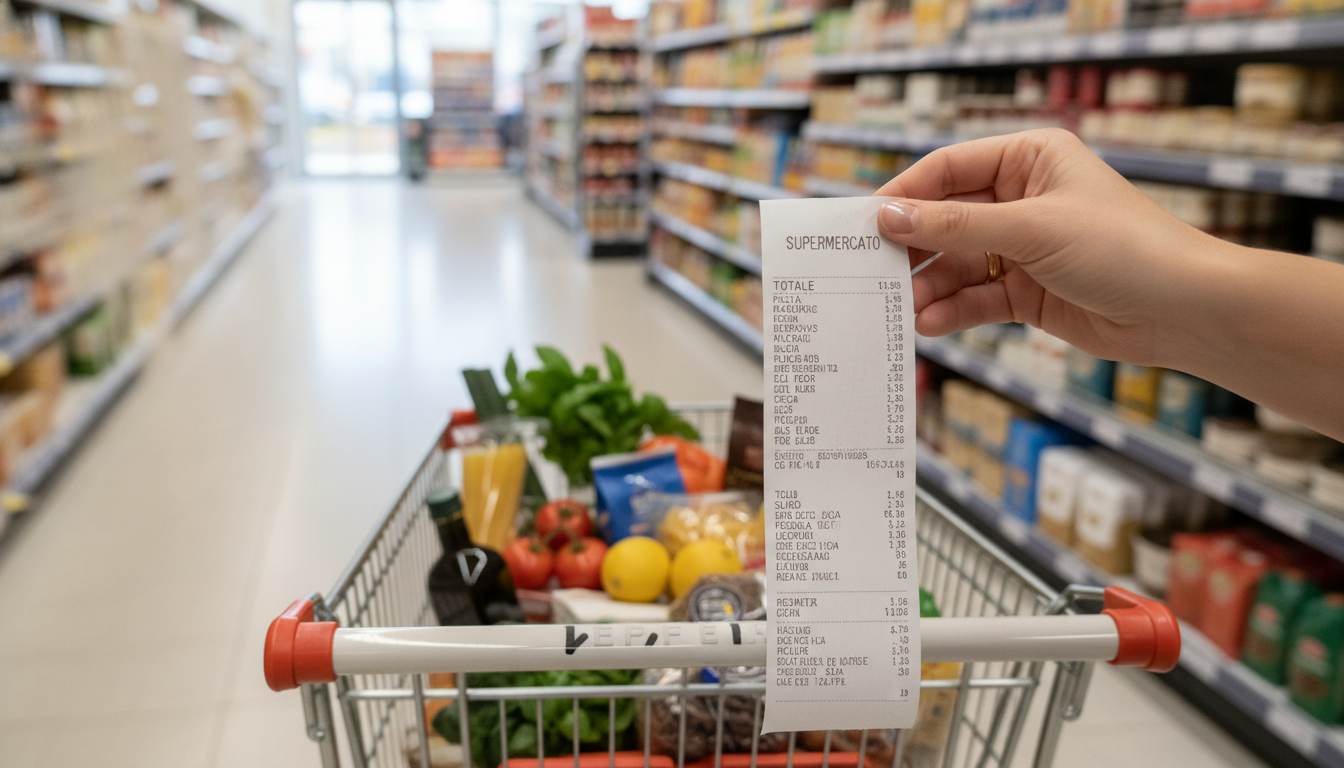
You just got home from the supermarket, wrestling a crumpled scontrino out of your pocket. You look at a line item like "LATTE PARZ SK" and wonder if you paid too much for that milk. Maybe the store down the street would have been cheaper, but how would you even know? This is a common scene for anyone trying to manage their grocery budget in Milan, a city with a dizzying array of supermarket options.
TL;DR: There isn't one single "cheapest supermarket" in Milan for everyone. Your best bet is to track your specific basket of goods, use a smart shopping list, and compare prices across stores like Esselunga, Coop, Carrefour, Lidl, and Aldi. Tools like Costmanager.online can automate price tracking and help you pinpoint the best deals for your unique needs. Focus on promotions, loyalty programs, and seasonal produce for maximum savings.
Understanding Milan's Grocery Scene
Milan offers a diverse supermarket landscape, from high-end gourmet shops to budget-friendly discount stores. Each chain has its own pricing strategy, product selection, and loyal customer base. Knowing their general strengths can help you narrow down where to start your price comparisons.
Main Supermarket Chains
- Esselunga: Often perceived as slightly more upscale than discounters, Esselunga is known for its wide selection, good quality fresh produce, and excellent private-label products. Their "Fìdaty Card" loyalty program offers significant discounts, and they often have competitive promotions on specific items. They're not always the cheapest overall, but can be for certain items with promotions.
- Coop: A consumer cooperative, Coop focuses on quality, ethical sourcing, and private-label products. Prices are generally mid-range, similar to Esselunga, but they can be very competitive on promotional items, especially for Coop members.
- Carrefour: With various formats (hypermarkets, supermarkets, express stores), Carrefour offers a broad range of products. Their hypermarkets often have good non-food sections. Prices can vary significantly between their different store types, with Carrefour Express being generally more expensive due to convenience. Look out for their "sconti" (discounts).
- Conad: Another widespread Italian chain, Conad operates through a franchise model, meaning prices and product ranges can vary slightly between individual stores. They often have strong local ties and focus on Italian products. Prices are usually competitive, especially on their own-brand items.
- Pam Panorama: Offers a mix of larger Panorama hypermarkets and smaller Pam Supermarkets. They frequently run promotions and have a loyalty card that provides additional discounts. Quality is generally good, and prices are often mid-range.
- Lidl: A German discount giant, Lidl is renowned for its low prices, especially on private-label products. They have a more limited selection of international brands, but their weekly themed offers (often non-food) are popular. For basic groceries and fresh produce, Lidl is consistently among the cheapest options.
- Aldi: Another German discounter, Aldi operates similarly to Lidl, focusing on private labels and a streamlined shopping experience to keep prices low. They've expanded significantly in Italy and are a strong contender for budget-conscious shoppers. Like Lidl, their strength is in basic groceries and limited, but cheap, specialty items.
Local Markets and Discount Stores
Don't forget the traditional Mercati Rionali (local markets) scattered across Milan. While they might not be cheapest for packaged goods, they can offer excellent value for seasonal fruits, vegetables, and sometimes meat or fish, especially towards closing time. Smaller, independent discount stores might also exist in your neighbourhood, offering unpredictable but potentially great deals.
Why "The Cheapest" Doesn't Exist for Everyone
This is the big secret: there isn't one single "cheapest supermarket in Milan" that wins every time for every shopper. The idea of a universally cheapest store is a myth, and here's why:
- Your Unique Shopping Basket: The specific items you buy make all the difference. If you primarily buy branded products, one store might be cheaper. If you prefer own-brand items, another could win. If you focus on fresh produce, a third might be best.
- Promotions and Sales: Supermarkets constantly run promotions. A store that's generally more expensive might have an unbeatable deal on your favourite coffee or olive oil this week. These change constantly, so comparing weekly flyers is key.
- Private Labels: Discount stores like Lidl and Aldi excel because their own-brand products are very cheap. But if you're loyal to a specific brand of pasta or yogurt not carried by them, their overall "cheapness" for you diminishes.
- Location and Convenience: The "cheapest" store might be across town, making the savings negligible once you factor in travel time and cost. The most affordable option is often the one that balances price with convenience.
Because of these factors, finding the cheapest supermarket in Milan isn't about finding a single store; it's about finding the cheapest *for your basket, this week*.
Your Strategy to Find the Cheapest Supermarket in Milan
So, how do you actually do this without spending hours comparing prices? It comes down to a smart, systematic approach.
Step 1: Track Your Spending
Before you can save, you need to know where your money is going. Many shoppers underestimate how much they spend on groceries or don't know which items are the biggest drain on their budget. Start by tracking every scontrino. This means capturing your receipts regularly and detailing what you bought.
Costmanager.online makes this incredibly simple. Just snap photos of your receipts – even long ones that require multiple pictures – or upload PDF receipts directly. Our service, which uses Google's Gemini AI by default (with on-device OCR as a fallback for reading failures), processes these receipts to extract item-level details. This means "LATTE PARZ SK" gets correctly identified as "Partially Skimmed Milk," and you see exactly what you paid for it. Nothing is saved to your account until you've reviewed and approved it, and your data is never sold.
Understanding your spending patterns is the first step to identifying where you can cut costs. For more on this, check out our guide on how to track grocery spending.
Step 2: Build a Smart Shopping List
Once you know what you usually buy, create a comprehensive shopping list. This isn't just a scribble on paper; it's a strategic tool. Costmanager.online's app allows you to build and manage your shopping list. The real power here is that it learns your buying habits and uses the price history it builds from your scanned receipts to suggest the cheapest shop for the items on your current list. Imagine building your list, and the app tells you, "This week, Lidl has the best deal on your milk and pasta, but Esselunga is cheaper for that specific olive oil."
Step 3: Compare Prices Effectively
This is where the rubber meets the road. Manual comparison can be time-consuming, but an app like Costmanager.online automates much of the heavy lifting. Here's a look at both approaches:
Manual Price Comparison Checklist
If you're going old school, here’s what to do:
- Identify Your Core Items: Pick 10-15 items you buy every week (milk, bread, eggs, pasta, a specific fruit/veg, etc.).
- Check Weekly Flyers: Most supermarkets publish weekly flyers (volantini) online or in-store. Note down prices for your core items.
- Visit Key Stores: Physically visit 2-3 of your most likely candidates (e.g., Lidl for basics, Esselunga for promotions, your local Conad).
- Keep a Price Book: A simple notebook or spreadsheet where you jot down prices for your core items at different stores.
| Item | Esselunga Price | Lidl Price | Carrefour Price | Your Cheapest |
|---|---|---|---|---|
| Milk (1L) | €1.29 | €0.99 | €1.15 | Lidl |
| Pasta (500g) | €0.89 | €0.75 | €0.95 | Lidl |
| Eggs (6-pack) | €2.10 | €1.85 | €2.00 | Lidl |
| Olive Oil (1L) | €6.50 (on promo) | €7.20 | €7.00 | Esselunga |
| Bananas (kg) | €1.99 | €1.79 | €1.89 | Lidl |
Illustrative Example: Prices are hypothetical and for demonstration purposes only.
Automating with Costmanager.online
This manual process quickly becomes overwhelming. This is where Costmanager.online truly shines. By regularly scanning your receipts from different stores in Milan, the app builds a personal price history for every product you buy. This means:
- Item-Level Insights: You'll see exactly what you paid for "Partially Skimmed Milk" at Esselunga last week versus Lidl this week.
- Price History per Product: The app tracks how prices change over time for specific products across different shops. This helps you spot genuine deals versus inflated "discounts."
- Cheapest Shop Finder: When you create your shopping list in the app, it uses this accumulated price data to recommend which supermarket currently has the lowest prices for the items you need. This saves you significant time and ensures you're always making the most informed decision.
- Price Alerts (Pro feature): Get notified when a product you frequently buy drops below a certain price point at a nearby store.
Remember, Costmanager.online utilizes powerful AI services like Google's Gemini to accurately read and categorize your purchases from receipts, even those tricky abbreviations or faded thermal paper slips. Your data is always handled with privacy in mind, never saved to your account until your approval, and never sold.
Step 4: Loyalty Programs and Promotions
Beyond comparing base prices, loyalty programs are a significant way to save money. The Esselunga Fìdaty Card, Coop Card, and Carrefour's loyalty program all offer exclusive discounts, points, and personalized offers. Make sure you sign up for these and use them every time you shop.
Always check the weekly flyers and in-store promotions. Supermarkets often use "loss leaders" – items sold at a very low price to get you in the door. If these happen to be items on your list, you can save big. However, be mindful not to buy things you don't need just because they're on sale.
Practical Tips for Milanese Shoppers
Consider Store Brand vs. Name Brand
For many staple items like pasta, rice, flour, milk, and canned goods, supermarket own-brand products offer comparable quality at significantly lower prices. Esselunga, Coop, and Conad all have strong private labels. Discounters like Lidl and Aldi primarily stock their own brands, which is a key reason for their low prices.
Seasonal Produce
Buying fruits and vegetables that are in season in Italy will almost always be cheaper and fresher. An Italian grocery calendar can be your best friend. Out-of-season items usually come from further away, costing more and often tasting less vibrant.
Bulk Buying (with caution)
For non-perishable items you use frequently (e.g., toilet paper, detergent, certain dry goods), buying in larger quantities when they're on sale can save money. However, ensure you have storage space and that the unit price is genuinely lower. Don't buy in bulk if it means waste or ties up too much cash.
Check Freshness and Waste
Sometimes, a slightly higher price for better quality fresh produce or meat can be more economical if it lasts longer and prevents waste. Consider your habits: if you often throw away half a bag of salad, buying a smaller, slightly more expensive but fresher pack might save you money in the long run.
Key Takeaways
- The "cheapest supermarket" in Milan depends entirely on your specific shopping list and weekly promotions.
- Milan offers diverse options from discounters like Lidl and Aldi to full-service stores like Esselunga and Coop.
- Tracking your purchases at an item level is essential to understanding your actual spending.
- Costmanager.online helps you scan receipts, track price history, and identify the cheapest shop for your current shopping list.
- use loyalty programs, weekly flyers, and seasonal produce for maximum savings.
- Don't forget local markets for fresh produce deals.
Your Personal Price Tracker for Milan
Finding the cheapest supermarket in Milan for *your* groceries is an ongoing task, not a one-time discovery. It requires a bit of strategy and consistent effort. However, with the right tools, it doesn't have to be a chore. By using an app like Costmanager.online to digitize your receipts, track item prices, and build smart shopping lists, you're not just guessing anymore. You're making informed, data-driven decisions that can significantly reduce your grocery bill every month. Start scanning those scontrini and take control of your grocery budget!
Frequently asked questions
Is Esselunga the cheapest supermarket in Milan?
Esselunga is not consistently the cheapest supermarket in Milan across all products. While they offer good quality and frequent promotions, especially for Fìdaty cardholders, discounters like Lidl and Aldi often have lower base prices for everyday staples and private-label items. Esselunga can be cheapest for specific promotional items or their excellent own-brand products.
How can I compare grocery prices across different supermarkets in Milan?
To compare prices effectively, track your core shopping list items. You can manually check weekly flyers and visit different stores, or use an app like Costmanager.online. By scanning all your receipts, Costmanager.online builds a price history for each item you buy across various stores, helping you identify where your specific basket is cheapest.
Do discount supermarkets like Lidl and Aldi always have the best prices in Milan?
Lidl and Aldi generally offer the lowest prices on their private-label products and basic groceries due to their business model. However, they may not always be cheapest for branded items or specific promotional offers found at other supermarkets like Esselunga or Coop. For a basket heavy on own-brand staples, they are usually a strong contender.
What's the best way to save money on groceries in Milan beyond finding the cheapest store?
Beyond comparing store prices, focus on creating a strict shopping list to avoid impulse buys, utilize supermarket loyalty programs, and always check weekly promotions. Buying seasonal fruits and vegetables, choosing store brands over name brands, and reducing food waste are also highly effective strategies to save money on groceries in Milan.